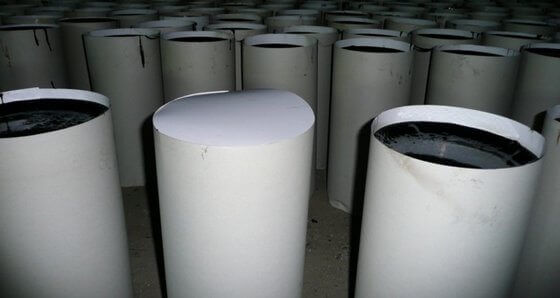
BLOWER BITUMEN

Blown asphalt is obtained by blowing hot air into pure asphalt in the final stage of the refining process. In this process, hot air with a temperature of 200 to 300 degrees Celsius is blown into the chamber containing the asphalt through perforated pipes. As a result of this process, the hydrogen atoms in the hydrocarbon molecules of the asphalt combine with oxygen in the air, and polymerization occurs with the formation of water. Blown asphalt has a lower penetration grade than pure asphalt, a higher softening point, and less sensitivity to temperature changes. Oxidized (blown) asphalts are entirely used in industrial applications such as building waterproofing (roofing and flooring), tires, pipe coating, paint, etc. These types of asphalt are categorized and coded using softening point and penetration grade; for example, 85/40 asphalt is an oxidized asphalt that has a softening point of 85±5 oC and a penetration grade of 40±5 dmm. Oxidized asphalts also comply with solubility and weight loss due to heat standards.