Attached File
Click The Link Below To Download The PDF File
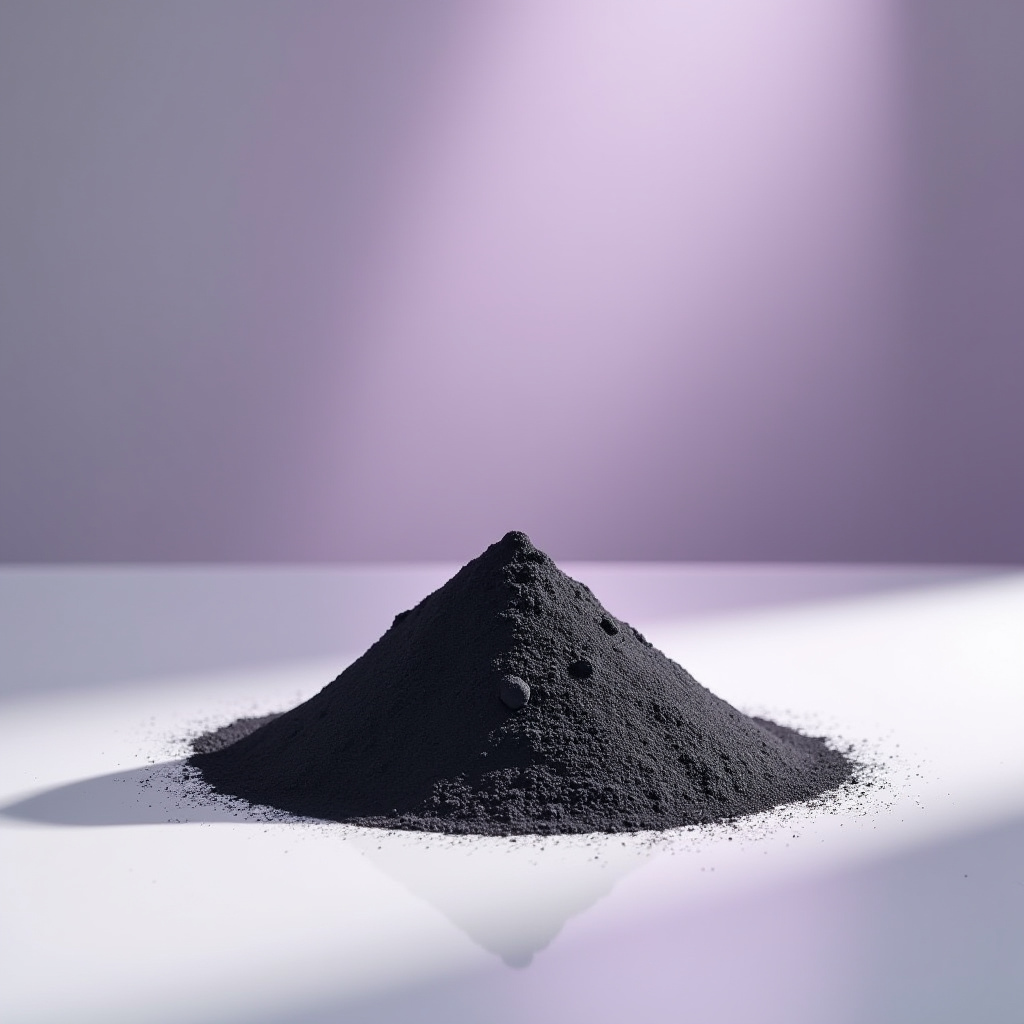
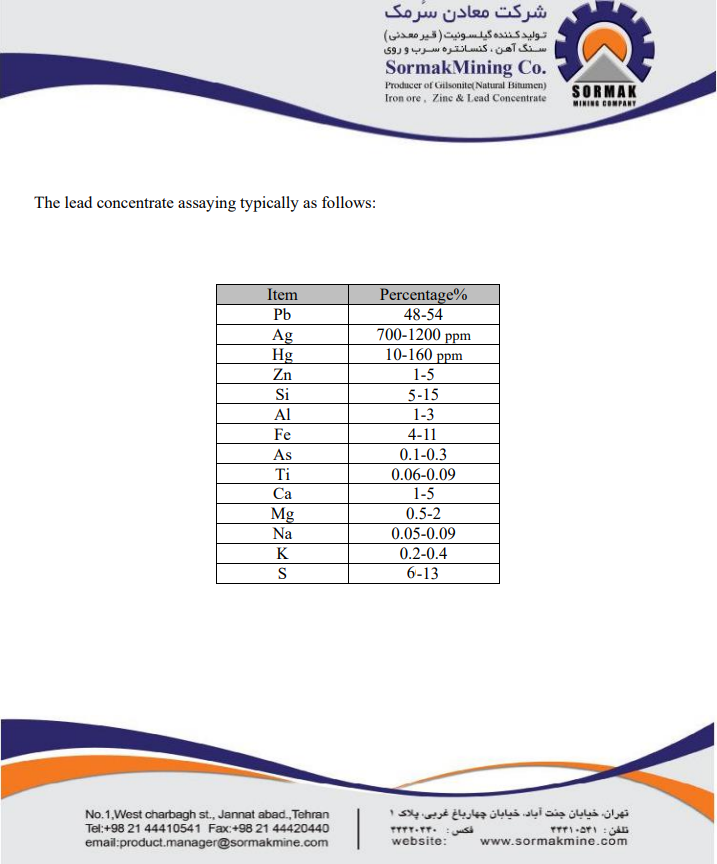
Sarmak Mining Company, with an annual production capacity of 4,000 tons of lead concentrate, is one of the most important suppliers of lead concentrate to the National Iranian Lead & Zinc Company. It is worth mentioning that in the near future, with the use of new technology in the field of flotation cells, the results presented below will increase significantly. Sarmak Company offers two types of sulfide and carbonate lead concentrate separately.
General Specifications of Lead (Pb)
Lead is a soft and heavy metal with good corrosion resistance and is one of the oldest metals used by humans. Lead is less abundant in the Earth's crust than copper and zinc, and is the thirty-first most abundant element in the Earth's crust. The atomic number of lead is 82, it is dull gray in color, and it is a toxic, malleable metal and the heaviest stable element.
Among the very important properties of lead that have led to specific applications is its resistance to sulfuric acid. For this reason, lead is used as a protective layer in applications that require reaction in the presence of sulfuric acid. It has less resistance to hydrochloric acid and is not resistant to nitric acid (oxidizing acid).
In Iran, lead has been known since the late third millennium BC, and because lead carbonates are easy to melt, the exploitation of lead carbonate mines has been given more attention. In pre-Islamic periods, lead was used as mortar in construction, dam construction and bridge construction, as well as for making paints, paintings and pharmaceuticals. After Islam, the exploitation of lead mines was for obtaining silver, so that even in some books these mines are called silver mines. Before World War II, lead consumption in Iran was negligible and little exploitation of lead mines was done, while after the war, these mines became important and lead was used as an export product and currency earner.
Lead resources
In nature, the two elements lead and zinc are often found together. Nearly ۷۰% of mineral lead is produced from mixed lead and zinc ores, which usually have higher amounts of zinc than lead. Nearly 20% of lead production is related to mixed ores in which the amount of lead is greater than zinc, and 10% of the rest of the lead production is related to copper minerals.
So far, 130 types of lead ore have been identified, among which lead sulfide (galena) is the most important.
90% of lead metal production is from this ore. Another important lead ore is cerussite or carbonate. Lead is found in nature as sulfide, sulfate, carbonate and lead salts.
Lead applications
The main applications of lead are divided into two categories: physical and chemical, which are listed below:
Chemical materials play an important and fundamental role in the efficiency and productivity of mineral processing in the mining industry. Approximately 2 billion tons of ore are processed annually by the flotation process. This amount of processing indicates the high consumption of chemical materials used in flotation (collectors, frothers, flocculants and modifiers). In general, the chemical materials used in the mining industry can be classified into the following groups:
– Explosives: Materials that have the ability to explode. It is done to reduce the size of particles in mines in order to allow the removal and transport of ores.
– Flocculants: Materials that cause the agglomeration of fine solid materials suspended in liquids in order to perform separation better and easier (such as polyacrylamide).
– Collectors: Materials that are absorbed on the surface of the mineral and cause it to become hydrophobic (such as alkyl xanthate salts that are heavily used for sulfide ores).
– Frothers: These are materials that consist of two polar parts (usually an alcohol or glycol functional group) and non-polar (non-polar hydrocarbons) and cause the air bubbles to stabilize in the flotation process (such as methyl isobutyl carbinol).
– Leaching agents: Materials that selectively dissolve the desired material from the ore (such as sulfuric acid for oxide ores, cyanides for gold dissolution and caustic soda for alumina production)
– Chemical materials used in solvent extraction: Organic materials used to purify and separate the desired cations dissolved in acid (most extractants in the copper production industry include the oxime functional group).